Shipped
Redesigning OPNX’s onboarding to improve activation and trust
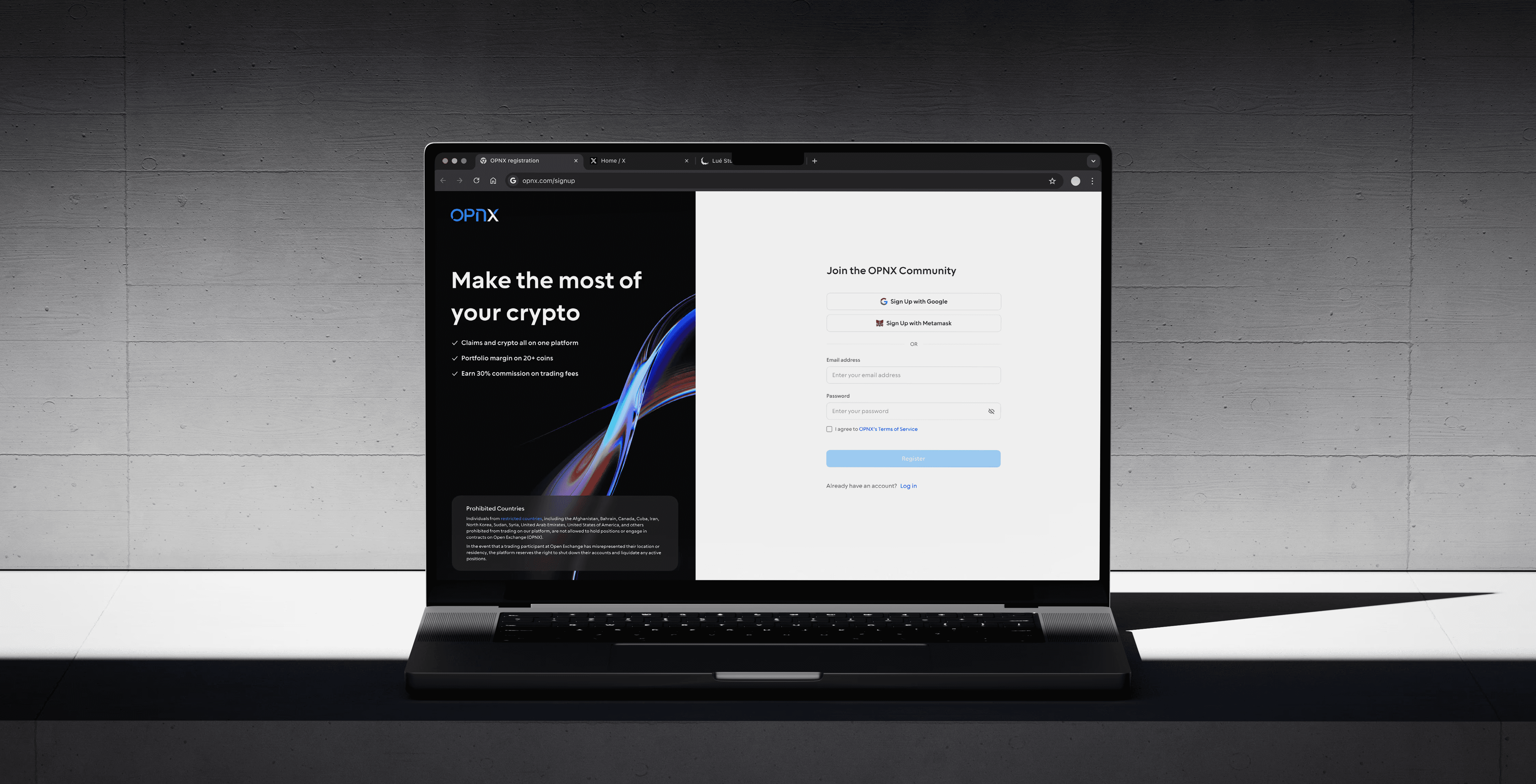
I led the design of the full onboarding funnel, covering the landing page, registration, login, KYC, and in-product education.
Product
Web, iOS and Android
Skills
Project management
Product design (0-1)
Stakeholder management
User research & testing
My role
Design lead
Timeline
Q2 - Q3 2023
Problem
The fastest signup flow became the biggest onboarding gap.
As part of the CoinFLEX → OPNX transition review, we flagged onboarding as a high-priority ticket: one click created an account, then sent users back to the homepage without context. This was a missed chance to educate, activate, and build trust.
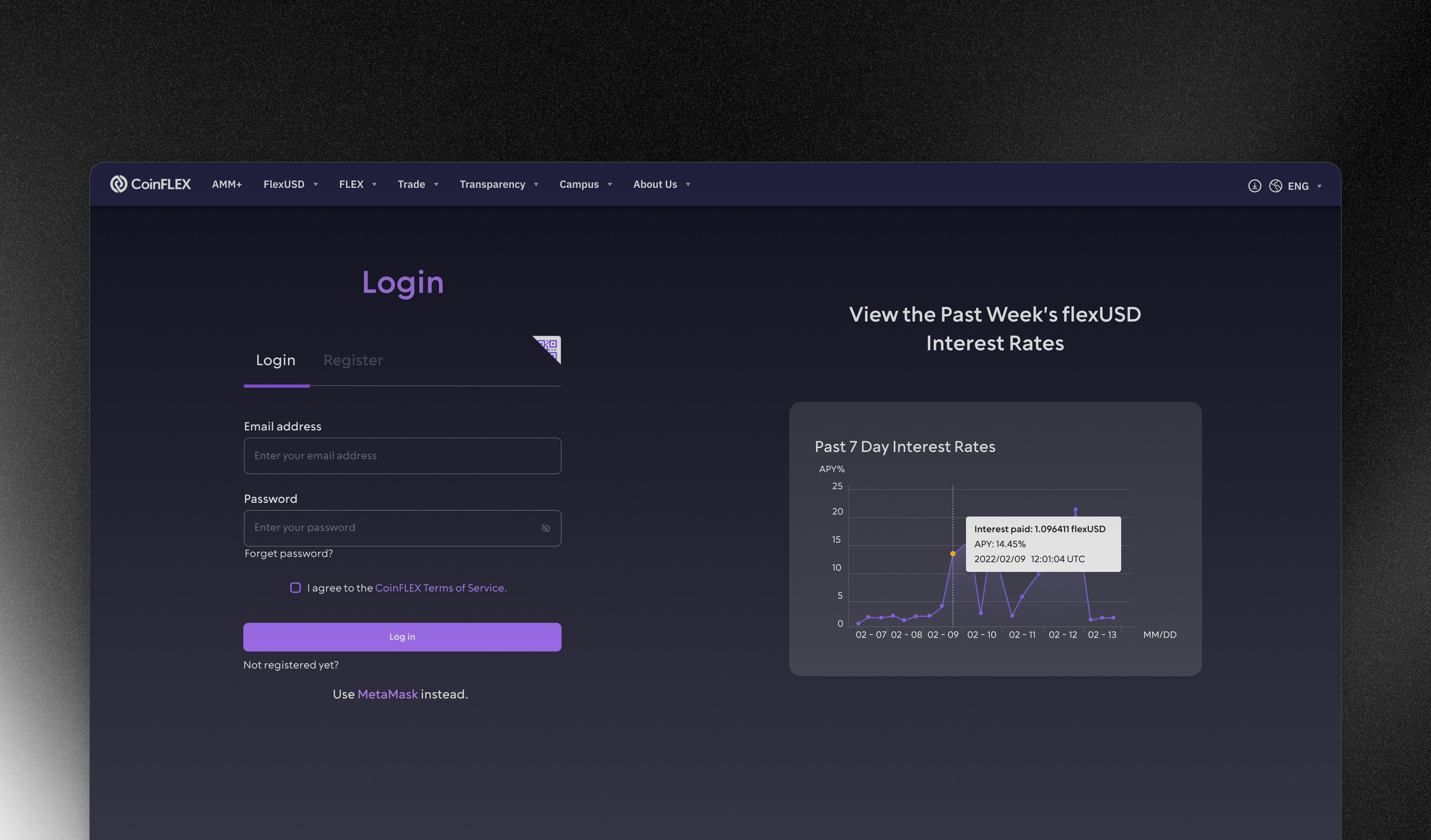
One click signup without orientation and commitment
Friction was removed too early. Users entered the product without understanding what to do next or why it mattered, making early drop-off more likely.
Complex product value with no first-time framing
Education had to be intentional and sequenced, without overwhelming users or over-promising features.
High user scepticism at the point of entry
Users were entering a regulated crypto platform with heightened caution. Without onboarding, trust had to be earned immediately.
Fragmented first-time experience across surfaces
The landing page, signup flow, and post-signup experience operated independently, creating a disjointed first impression.
Constraints
Constraints shaping the onboarding experience
Onboarding needed to operate within a set of external constraints that shaped how trust, access, and expectations could be established for new users.
Existing bearish market + reputational damage
OPNX entered a bearish crypto market, where recent industry events and associated reputational damage had reduced baseline trust in exchanges.
Regulatory and compliance requirements
Regulatory requirements constrained pre-verification access, with transaction limits and permissions varying by jurisdiction
Incomplete product availability at launch
The platform's core offering (Claims trading) was not immediately available to users post-sign-up, however needed to be heavily marketed.
Business goal
Increase the proportion of new sign-ups who successfully complete onboarding and reach early activation, while maintaining trust and compliance in a regulated environment.
1
Increase onboarding completion
Ensure the majority of new sign-ups complete the onboarding flow and reach a clear post-sign-up state.
2
Improve early activation quality
Guide users toward meaningful first engagement rather than passive account creation.
3
Reduce early churn by building trust early
Minimise post-sign-up drop-off by creating a more trustworthy first-time experience.
Constraints
Constraints shaping the onboarding experience
Onboarding needed to operate within a set of external constraints that shaped how trust, access, and expectations could be established for new users.
Existing bearish market + reputational damage
OPNX entered a bearish crypto market, where recent industry events and associated reputational damage had reduced baseline trust in exchanges.
Regulatory and compliance requirements
Regulatory requirements constrained pre-verification access, with transaction limits and permissions varying by jurisdiction
Incomplete product availability at launch
The platform's core offering (Claims trading) was not immediately available to users post-sign-up, however needed to be heavily marketed.
Research
Research shaping the onboarding strategy
Rather than broad discovery, we focussed on a small set of high-signal research inputs. The goal was to identify where users were dropping off post-registration and what was preventing them from progressing on the platform.
Funnel analysis
Reviewing internal funnel data revealed that, out of approximately 14,000 users on CoinFLEX (the previous brand), email confirmations were disproportionately completed by already active users. This indicated that onboarding was frequently left incomplete, despite a low-friction sign-up experience.
Early churn before meaningful engagement
Many users exited within their first sessions, indicating a lack of clarity immediately post-registration.
Verifications was a common painpoint
Internal feedback and support signals highlighted confusion around verification, access limitations, and post-registration clarity.
Lack of a clear early value signal post-sign-up
Users did not encounter a clear moment of value immediately after registration, making it harder to justify completing additional steps.
Solution
Connected onboarding into a single, end-to-end system, not a standalone flow.
Instead of treating onboarding as an isolated UX problem, we aligned the landing page, signup, KYC constraints, product education and user/business intentions into one coherent journey. We helped users understand what OPNX offered, what was available today, and what steps they could complete with confidence.
The landing page set expectations about value and capability
While the landing page wasn’t part of the onboarding flow, it played a critical role in shaping user expectations that onboarding needed to address. We tested 3 different landing pages with different messaging and story telling to distill OPNXs value and core offerings.
Establishing context and trust at entry
In a regulated product, trust begins before the first action.
Establish a shared understanding before engagement
Before asking users to commit time or personal information, we set clear expectations around what the platform offers, how it operates, and who it is for.
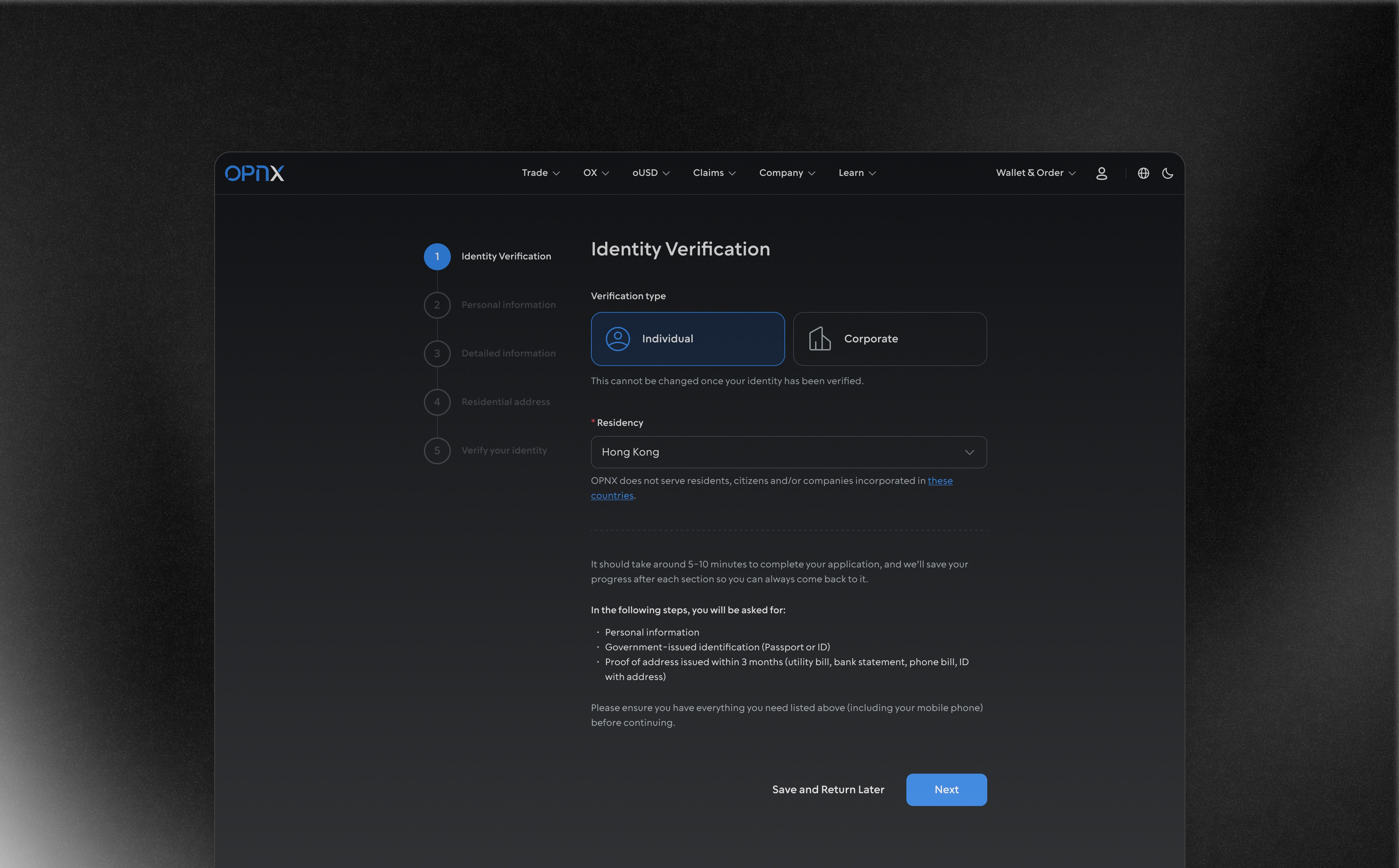
Providing KYC into the flow as a trust signal
Including KYC within onboarding helped reframe regulatory requirements as a clear progression path, aligning user expectations and reinforcing trust
Choosing the right action for users to take
We wanted users to explore OPNX and give a clear action for them to take at the end of the onboarding process.
The product tour oriented user around available actions
This allowed users to be familiar with the trading interface as soon as possible
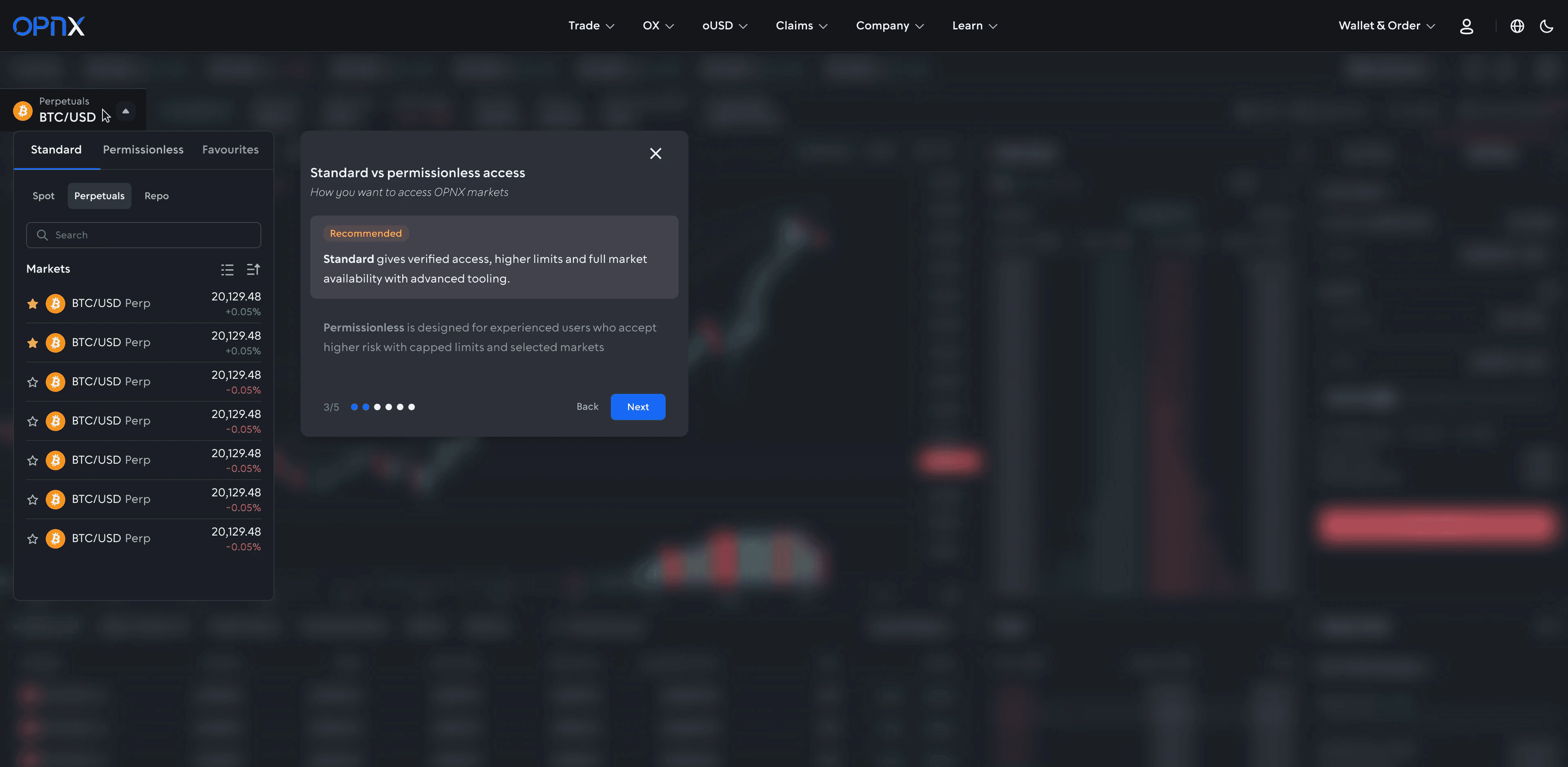
Expectations for compliance and regulatory requirements
KYC was introduced early in the onboarding flow to clearly set expectations around regulatory requirements post-onboarding.
Reinforcing legitimacy through clarity
For users evaluating trust in a centralised exchange, this transparency acted as a strong signal of legitimacy rather than friction.
Results
Onboarding validated the design, but revealed activation challenges
Strong onboarding performance revealed a disconnect between completion and activation.
98% onboarding completion rate
We received 98% completed sessions (with emails confirmed) for the user onboarding, which turned out to be a huge success. KYC verification page clicks also increased significantly, indicating that users are aware of regulation and compliant requirements after onboarding completion.
Increased trading GUI engagement (but limited activation)
The action behaviour we led users to were to explore the trading interface nad user engagement across the trading interface increased, validating improvements in orientation and product understanding.
However, this did not translate into a meaningful uplift in funded accounts or deposit actions, highlighting a gap between onboarding completion and commercial activation.
Key learning
We did further research on users' motivations and liquidity was a primary driver for users choosing to fund a centralised exchange.
This surfaced an important insight: onboarding successfully built trust and understanding, but did not sufficiently guide users toward the high-intent action.
Iteration & follow-up actions
We shifted the post-onboarding direction to the Deposit flow immediately after onboarding completion. This adjustment reframed onboarding as a bridge to activation rather than a terminal experience.
Within a month, we found that 7% of users deposited upon completing onboarding.