The Herd — From Bankruptcy
Storytelling to Staking
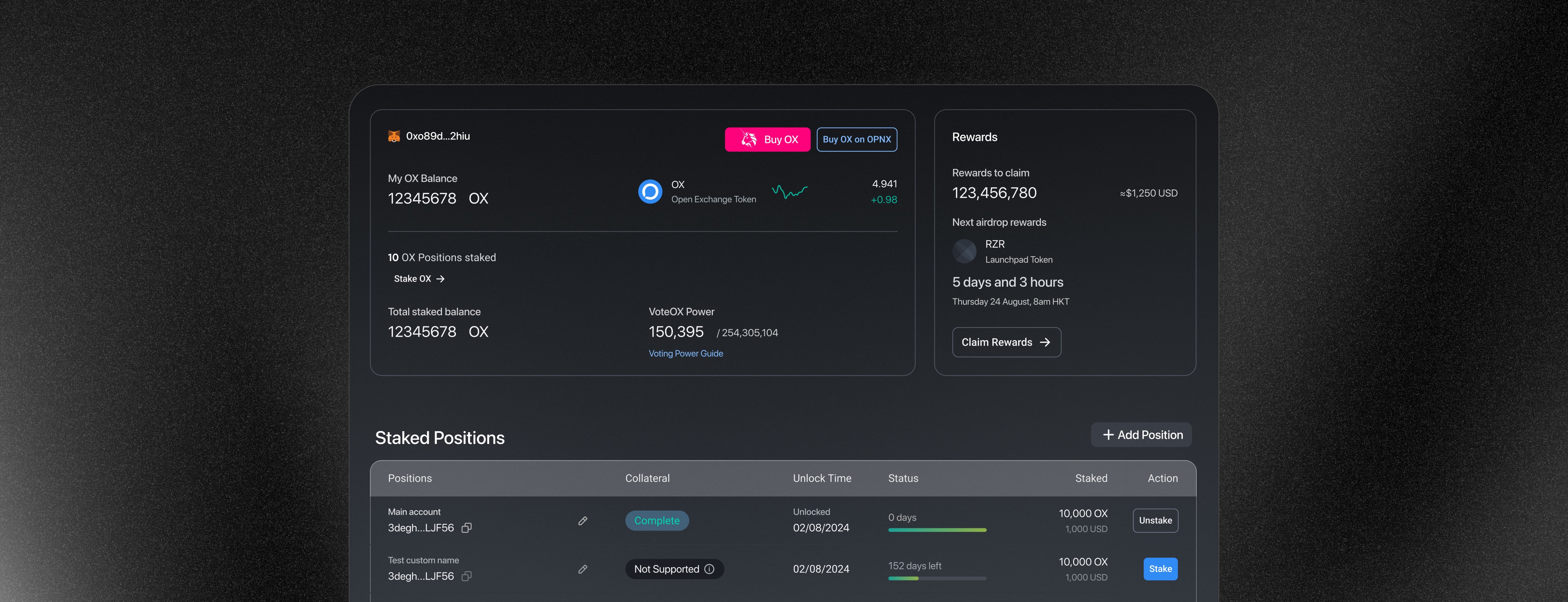
As team lead, I initiated user-research and drove the design strategy from 0-1 to redefine the defi product, and created a unified system integrated into OPNX.
This is a limited case study
Product
Web
Skills
User Research (surveys, interviews)
Stakeholder management
Product design
Roadmapping & prioritising
Leadership
Interactive prototyping
My role
Design lead
Timeline
Q3 - Q4 2023
Problem
A DeFi experience that failed to communicate value without Sales intervention, limiting self-serve adoption.
Built as a rapid spin-out by third-party developers, The Herd launched without a formal product specification, design system, or user research foundation.
As a result, core flows were fragmented, unclear rewards, and users struggled to build confidence in the product.
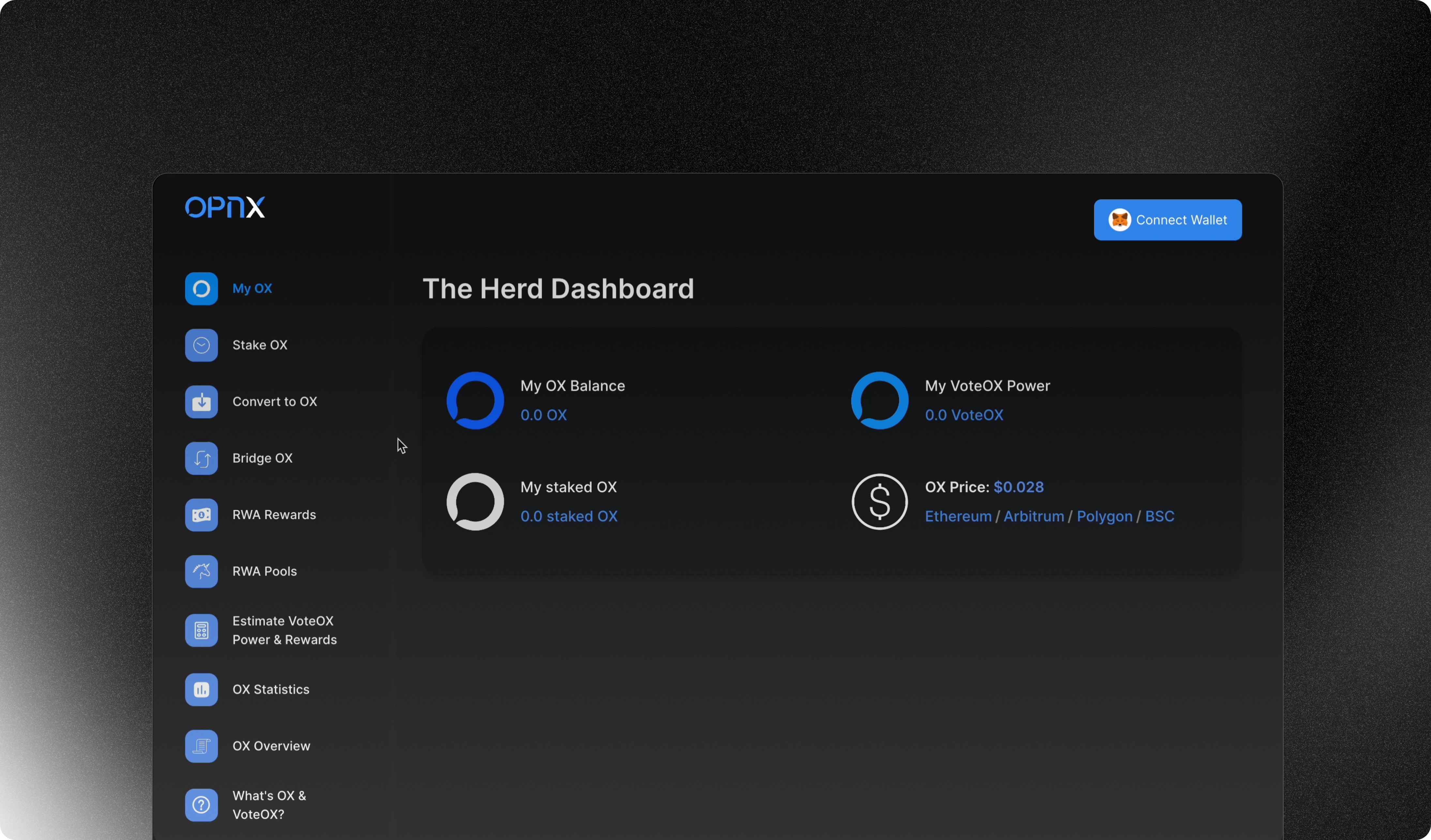
Current situation
Design Challenges
Context
C-suite wanted to redesign and launch the Herd quickly. The team had no clear product direction, nor prior research to guide decisions.
Observations
100% of 50 existing users required support for usability clarity and understanding what The Herd was and its offerings.
Business urgency
Following the platform rebrand, The Herd needed to relaunch quickly to rebuild trust and validate its value proposition. Any delay risked continued reliance on Sales-led explanations and slower user adoption.
High support burden
The product relied heavily on Sales and Support teams to explain basic functionality, signalling that core concepts were not self-evident within the interface. This dependency limited scalability and highlighted gaps in self-serve understanding.
Complex and fragmented user experience
Key flows such as staking and rewards were split across multiple surfaces, with technical terminology and navigation that did not align with user mental models.
This fragmentation made it difficult for users to understand how actions connected to outcomes.
Unclear rewards model
Users expected to earn OX through staking, but instead received alternative assets such as Justice Tokens, leading to confusion and low perceived value.
The lack of a clear rewards narrative weakened motivation and trust in the system.
Research
Balancing speed vs validation
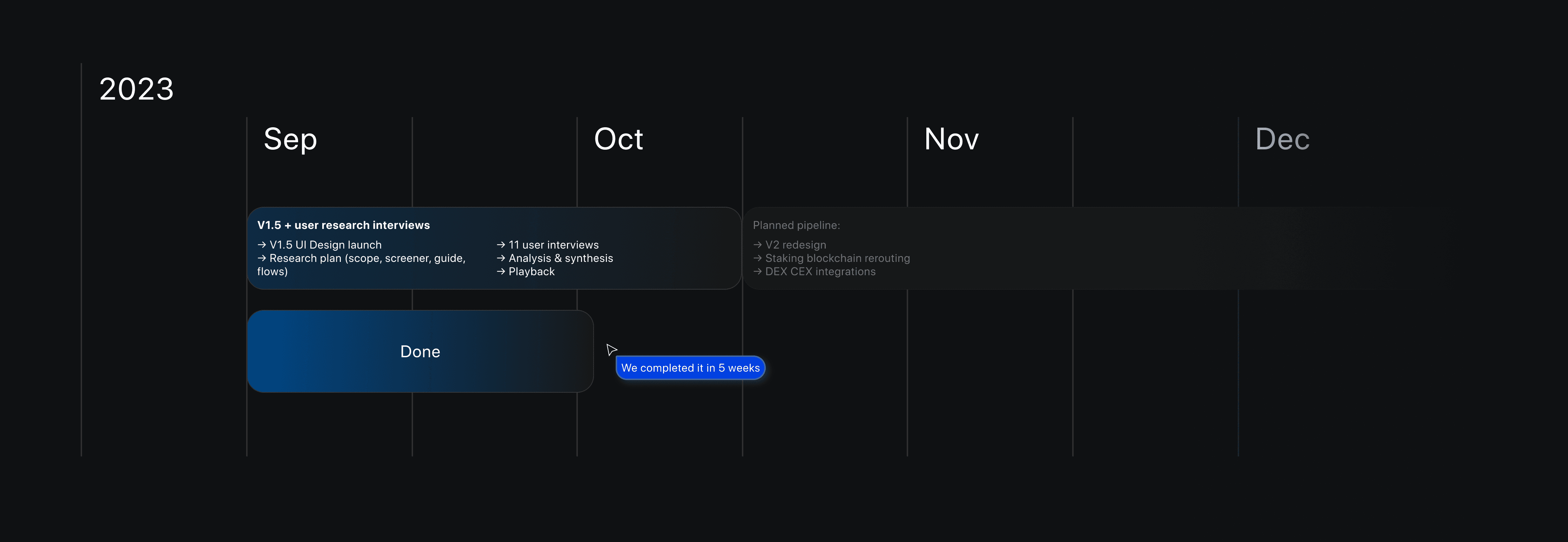
To balance business urgency with user validation, I ran the project in 2 parallel tracks
1
Design sprint (v1.5)
Leveraged design assumptions and crypto UX knowledge to rapidly build and launch an interim version for real-world testing.
Goal: Launch fast and gather behavioural data
2
User research (V2 groundwork)
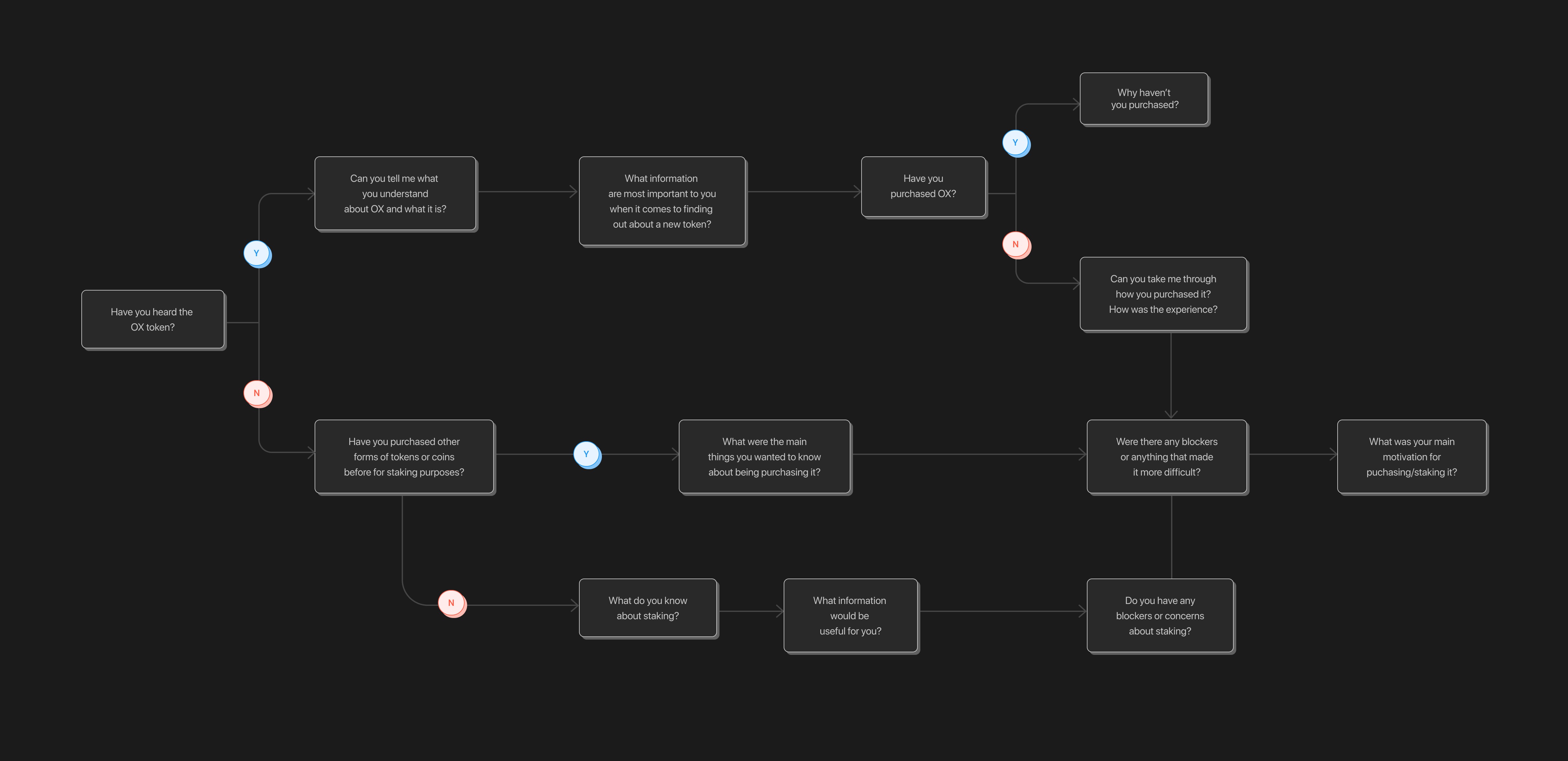
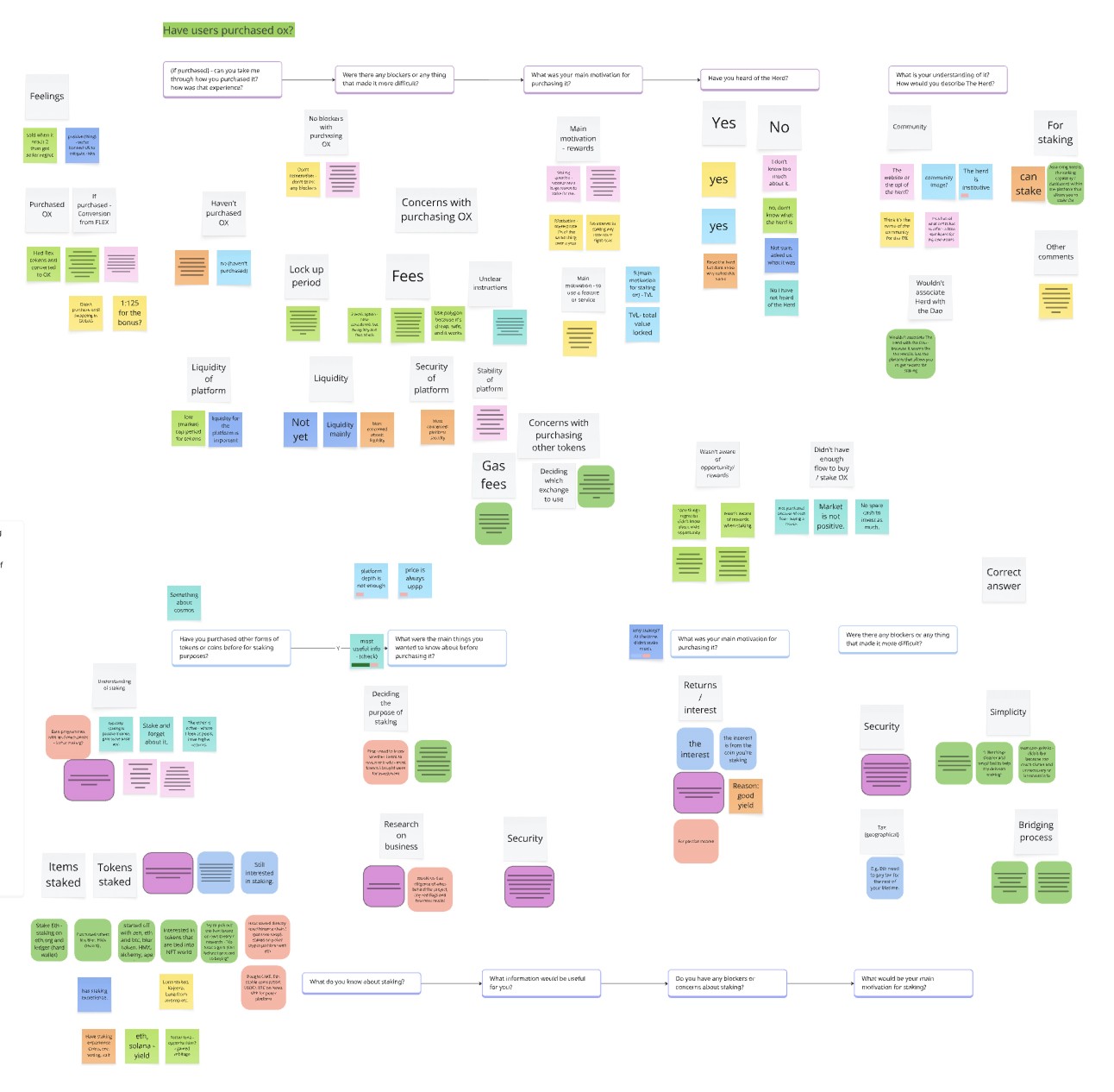
Conducted in-depth interviews and usability tests with 11 users to assess product–market fit and uncover insights to guide the full v2 redesign.
Goal: Validate desirability, product clarity and product market fit

Key takeaways
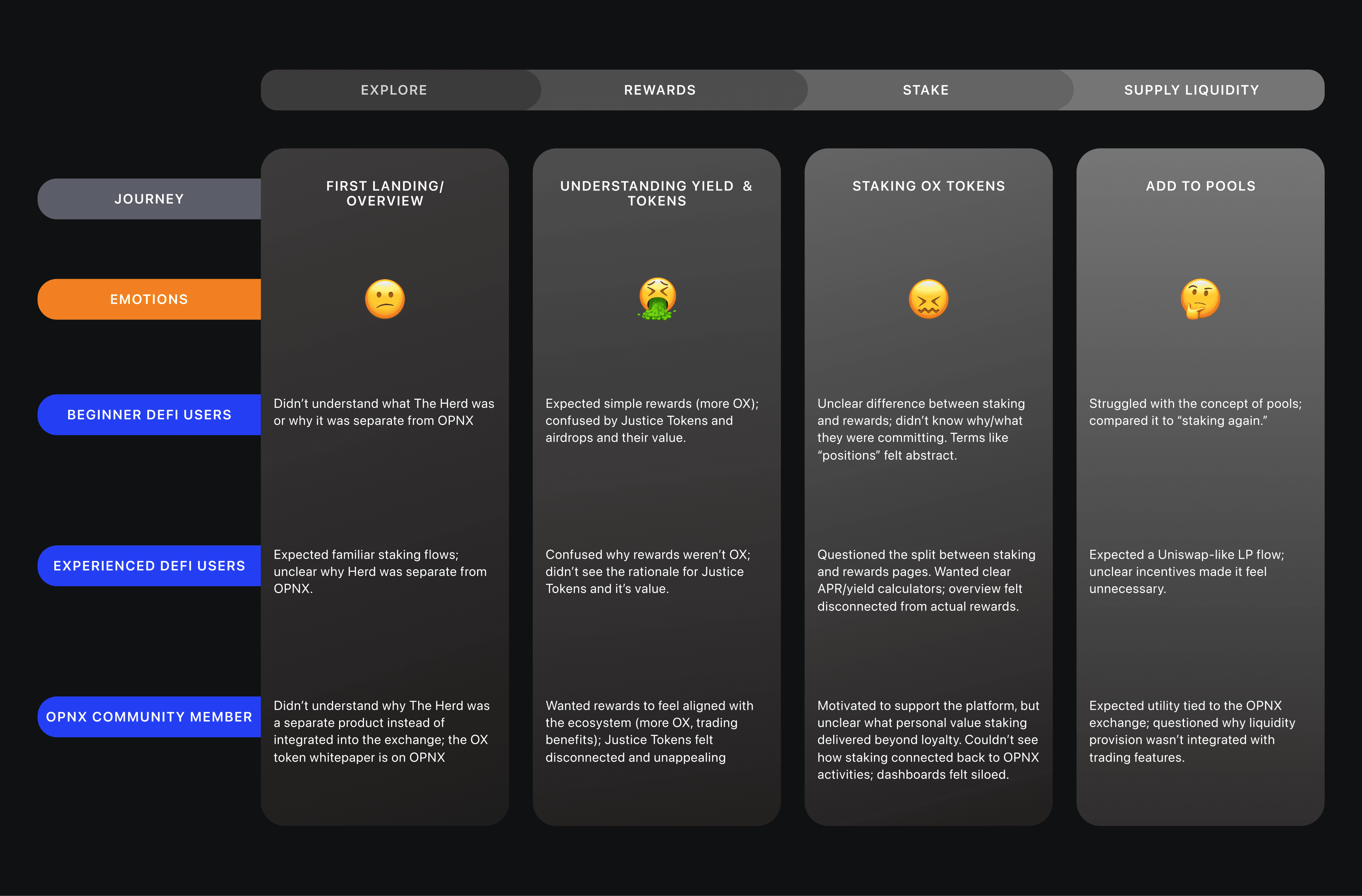
Through user interviews and community feedback, we discovered that one of the biggest friction points stemmed from how users perceived the value of The Herd rewards.
1
Design sprint (v1.5)
Leveraged design assumptions and crypto UX knowledge to rapidly build and launch an interim version for real-world testing.
Goal: Launch fast and gather behavioural data
2
User research (V2 groundwork)
Conducted in-depth interviews and usability tests with 11 users to assess product–market fit and uncover insights to guide the full v2 redesign.
Goal: Validate desirability, product clarity and product market fit
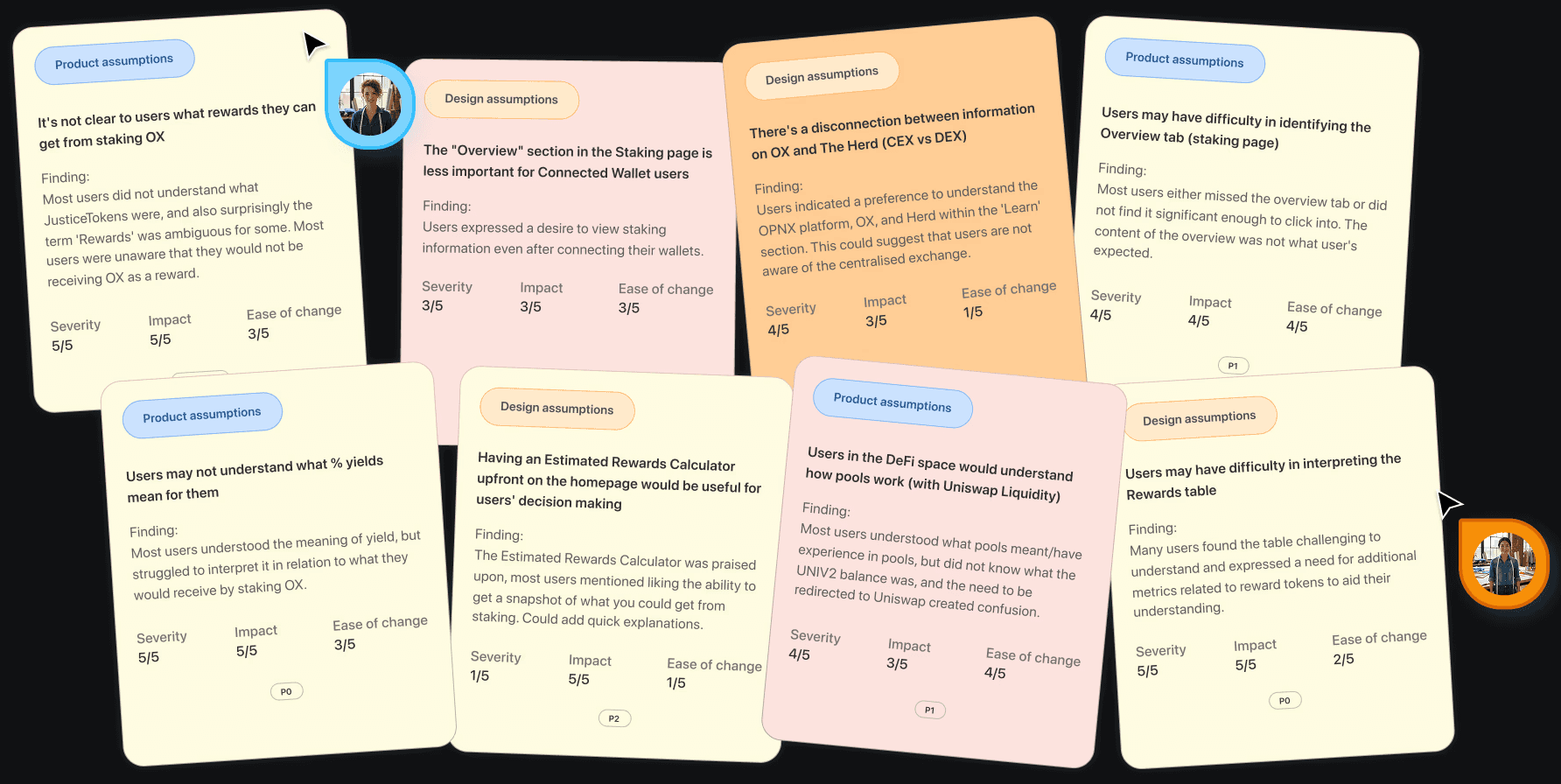
Low hanging fruit
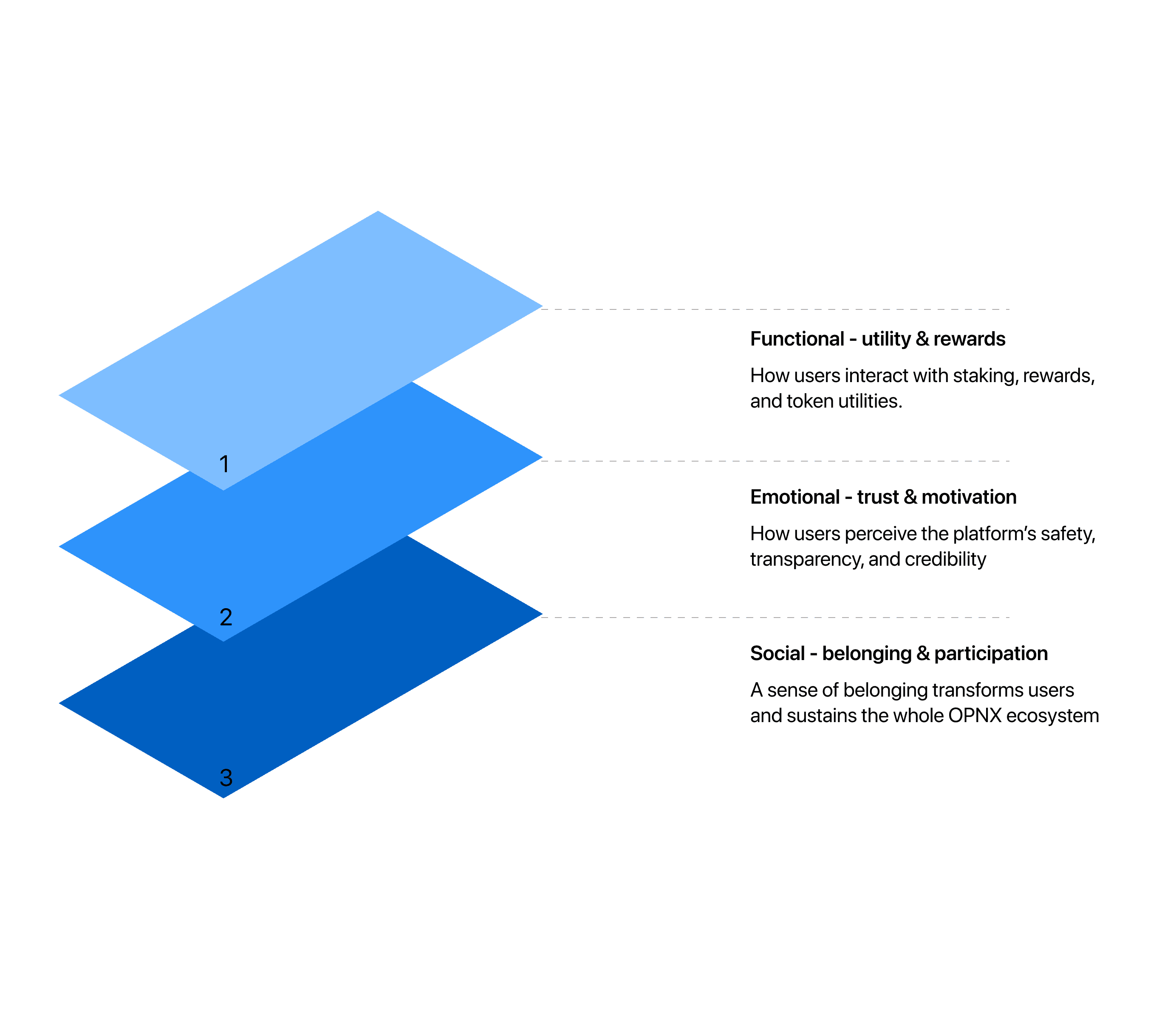
The Herd experience emerges from the balance of functional trust, emotional confidence, and social belonging.
Gaps in any layer, i.e. unclear rewards, low transparency, or weak community, directly impact engagement, staking activity, and ecosystem growth.
Solution
Designing a Unified Staking System
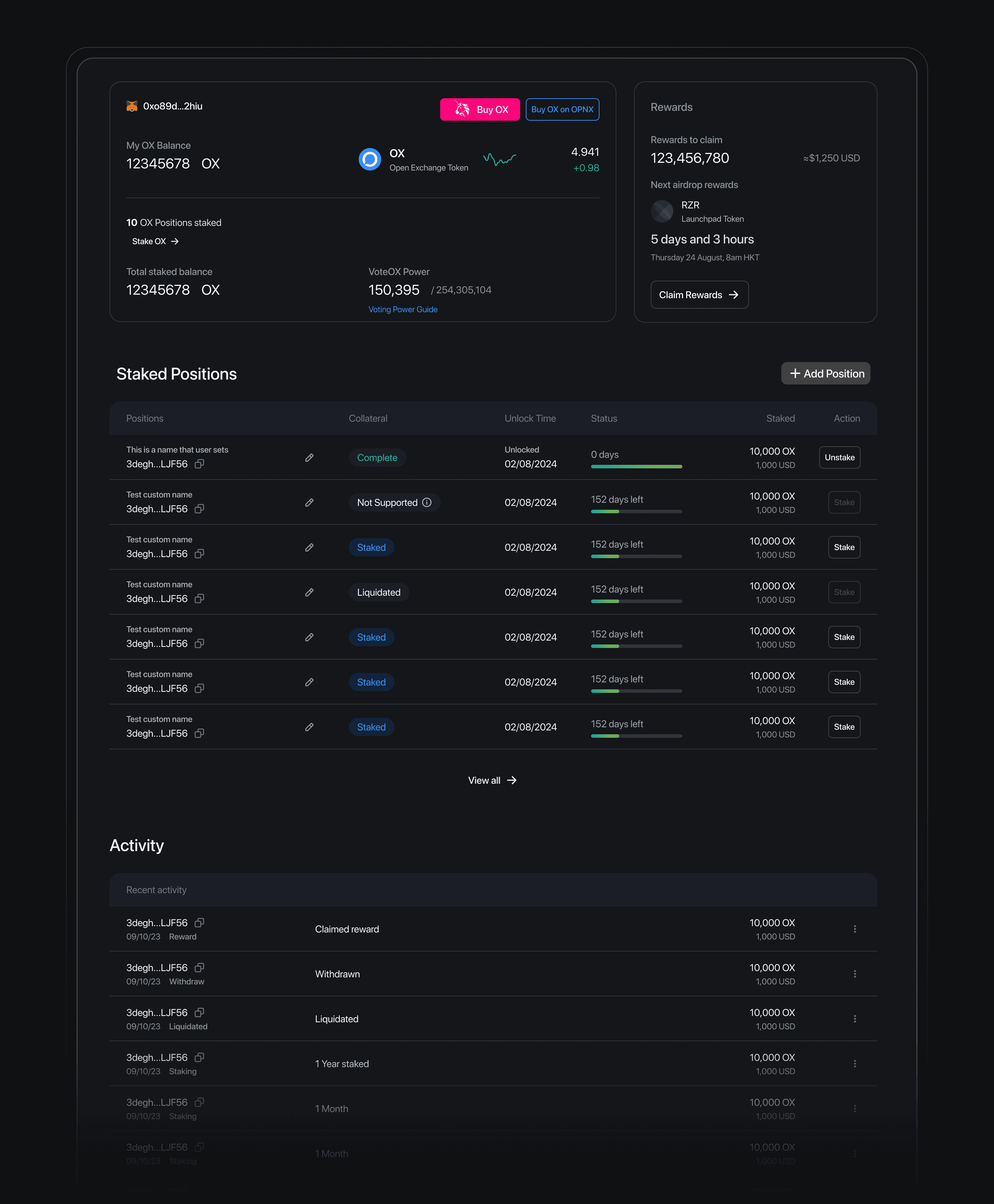
We redesigned The Herd by grounding decisions in user research rather than assumptions. Usability testing revealed the need to merge staking and rewards, simplify language, and clarify on how unconventional rewards like Justice Tokens worked.
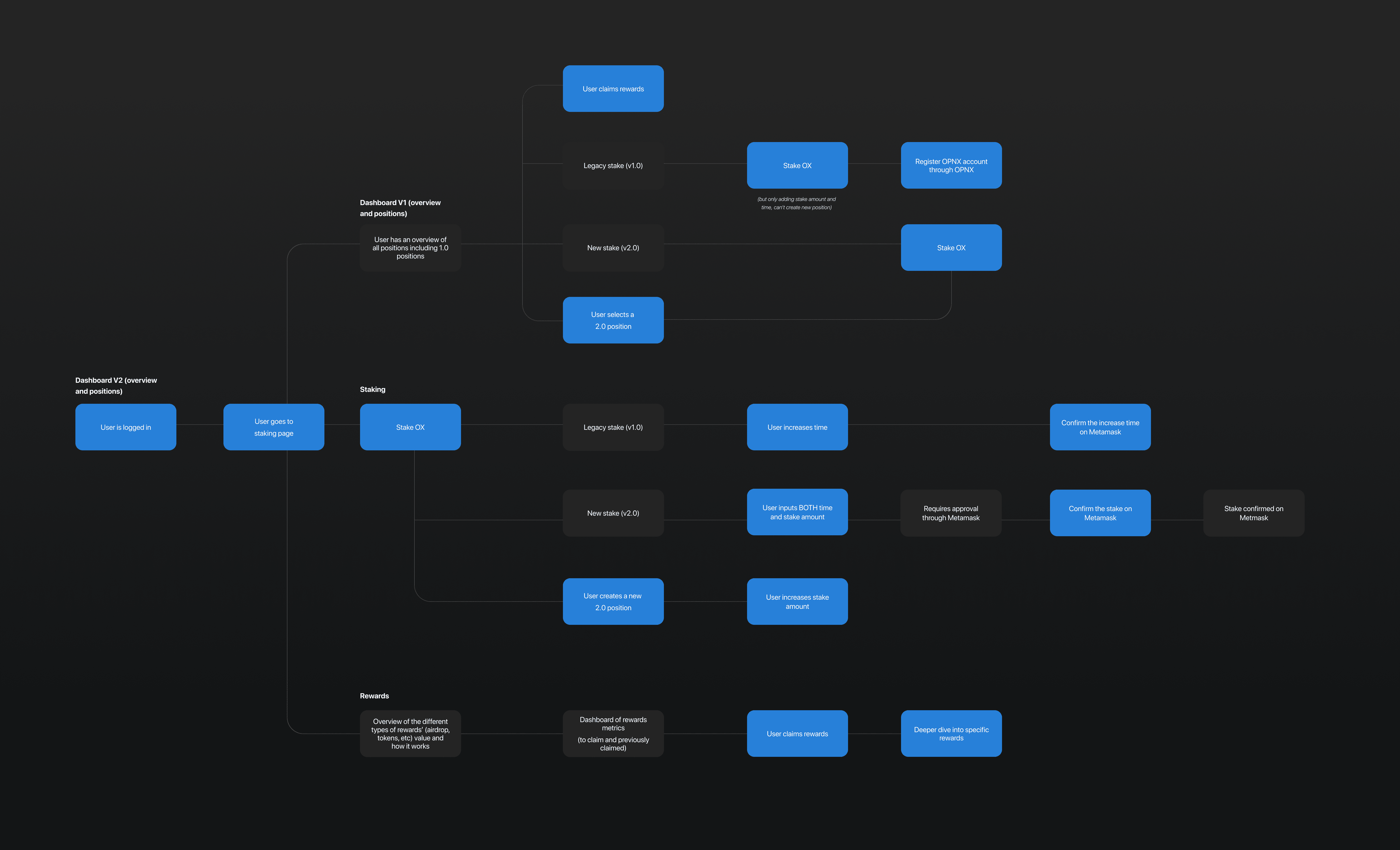
Dashboard designed for decision making
A consolidated dashboard replaces fragmented views, giving users a clear snapshot of balances, rewards, and positions.
Action is prioritised
By consolidating positions, rewards, and voting power into a single view, users can immediately understand their current state and what to do next, whether it's staking, claiming rewards, or adding a new position.
Designing for comprehension
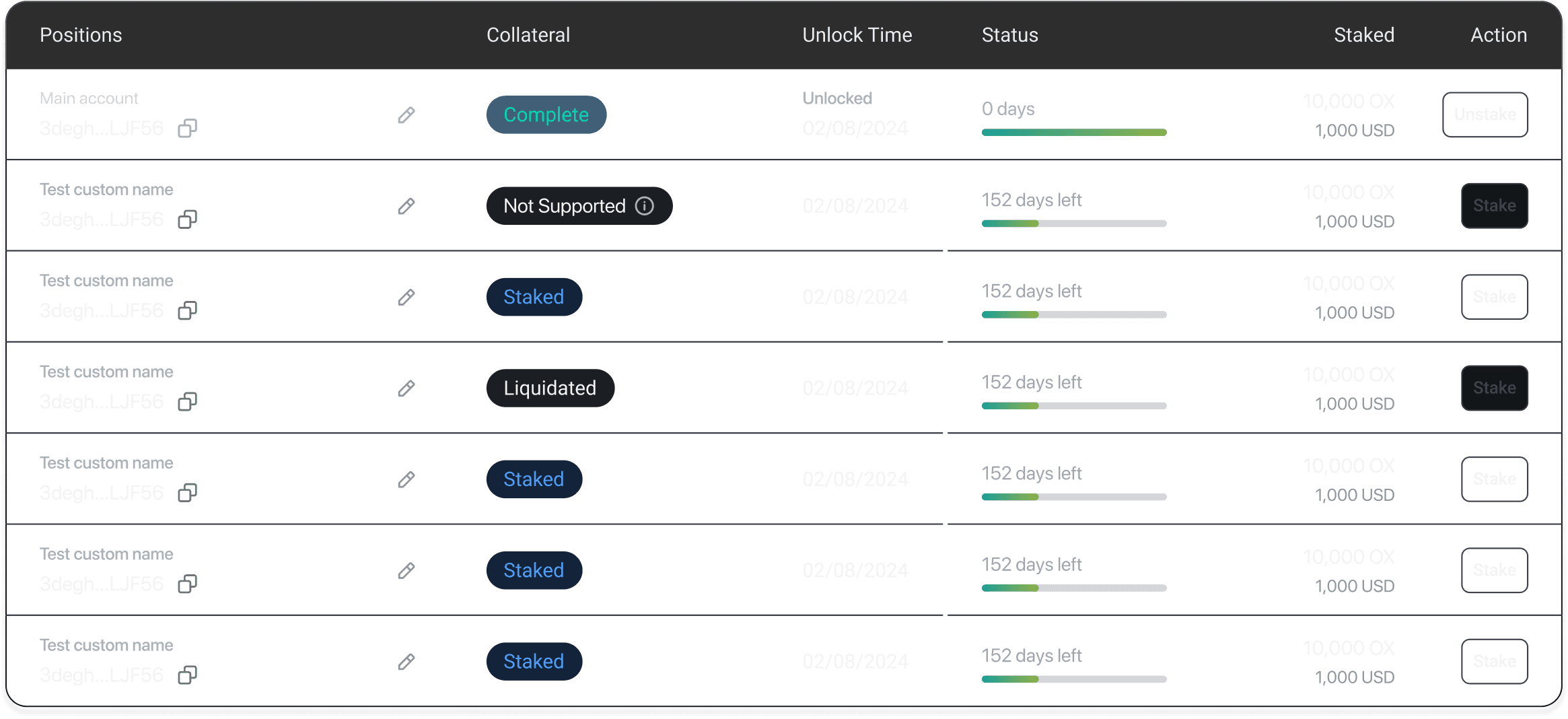
By making state and progress visible at every level, users can confidently engage without relying on external explanations.
Results
Design decisions that scaled beyond the UI
Through a focused research sprint, we uncovered fundamental gaps in user understanding around staking and rewards. Solving these problems not only improved clarity and reduced operational friction, but also provided a foundation for longer-term product and blockchain architecture decisions.
Uncovered true user problems
Usability testing revealed that the biggest barrier wasn’t just UI clutter, but fundamental confusion around non-standard rewards and fragmented flows.
Reduced support burden
Addressing these core issues meant users could navigate staking and rewards without constant Sales clarification.
Improved comprehension
Clearer storytelling and visual elements (e.g. impact calculator) helped users understand what they were earning and why it mattered
Design informed
We used the temporary redesign to unify product and platform: better UX on the surface, and to re-architect the blockchain stack,